INQUIRY
Leave Your Message
0%

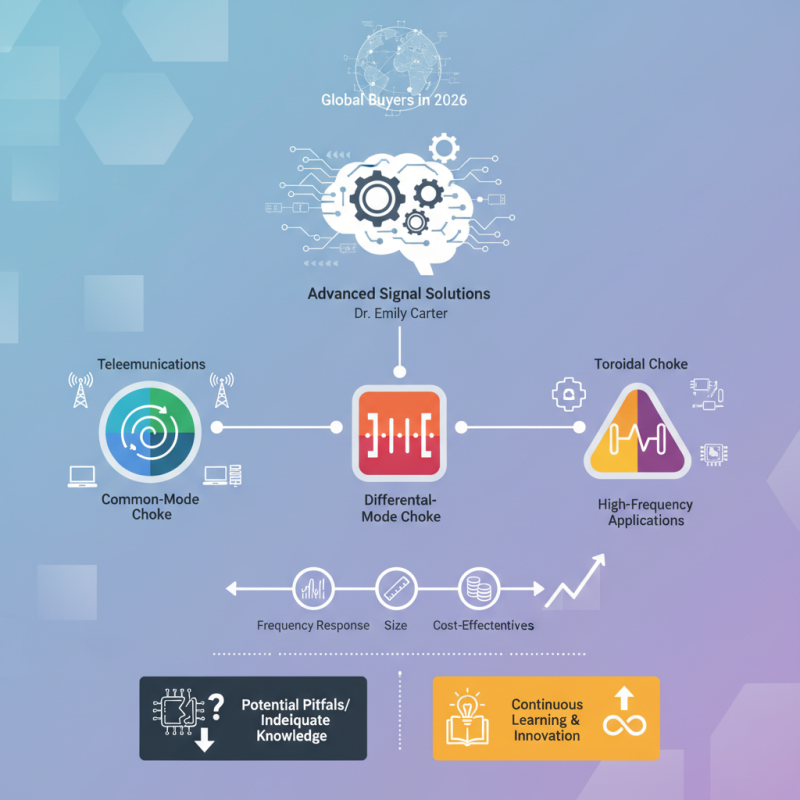
So, in the ever-changing world of electronics, the importance of Signal Choketech really can’t be overstated. I mean, Dr. Emily Carter from Advanced Signal Solutions puts it pretty well—she says, “Signal Chokes are a must-have for keeping signals clear, especially at high frequencies.” As folks around the globe start gearing up for the market shifts coming in 2026, it’s really important to get a good grip on the different types of Signal Chokes out there.

Getting to know these various products can help buyers make smarter choices. Each type is designed for a specific job, whether it’s in telecom or computing. With demand on the rise, it’s no surprise that picking the right Signal Choke isn’t always straightforward. Factors like frequency response, size, and budget come into play—and you really gotta consider them carefully.

Of course, the future’s looking pretty bright, but let’s not forget—there are some pitfalls too. If you don’t really understand the specs of Signal Chokes, it could lead to less-than-stellar performance. That’s why staying updated and continually learning is so important for everyone involved in this space. To really nail down top-notch signal management, you need to pay attention to the details and keep an eye on whatever new innovations are around the corner.
Top Signal Choke Types for Global Buyers in 2026?

Top Signal Choke Types: An Overview for Global Buyers in 2026

In 2026, global buyers will see a diverse range of Signal Choke types. These components are crucial for reducing electromagnetic interference in various applications. They play a vital role in improving signal integrity and ensuring device reliability. With increasing demand for electronic devices, understanding the latest trends is essential for buyers.

One important type is the common mode choke. It effectively filters noise from power lines and data lines, enhancing overall performance. Another noteworthy type is the Differential Mode Choke, which targets specific frequency ranges to minimize unwanted signals. Buyers should evaluate these options based on their specific needs, including size, operating frequency, and impedance.

Tips: Always consider the installation environment for Signal Chokes. Different materials may react uniquely to heat and humidity. Additionally, reviewing industry standards is critical. This ensures compatibility and compliance, reducing the risk of future issues. Conduct tests to measure performance under actual operational conditions. Remember to seek expert opinions when making investments in Signal Choke technology.

Top Signal Choke Types for Global Buyers in 2026

Choke Type Frequency Range (kHz) Inductance (μH) Current Rating (A) Applications
Common Mode Choke 150-1000 10-100 3-5 Power Supplies, Audio Equipment
Differential Mode Choke 10-300 1-50 1-10 Switching Power Supplies, Telecommunications
Rf Choke 1-3000 0.1-10 0.5-3 Broadcast, Wireless Communication
Power Inductor 1-100 1-1000 5-30 DC-DC Converters, Battery Management

Market Trends and Growth Projections for Signal Chokes in 2026

Top Signal Choke Types for Global Buyers in 2026?

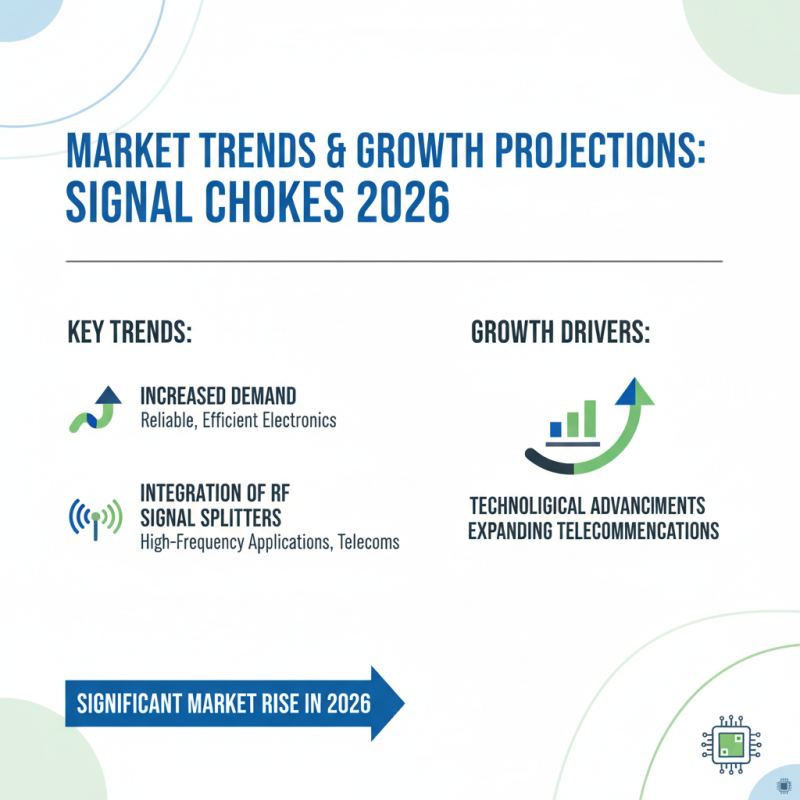
The demand for Signal Chokes is expected to rise significantly in 2026. As industries seek more reliable and efficient electronic solutions, understanding market trends becomes crucial. Key trends include the growing integration ofRf Signal Splitter technology. This shift is driven by advancements in telecommunications and the need for high-frequency applications.

The global market is shifting towards eco-friendly materials. Buyers should consider how sustainable practices impact efficiency. Many suppliers are gradually adopting greener manufacturing processes. However, not all products may meet these standards. Always check certifications before making a purchase.

Investing in high-quality signal chokes can improve system performance. A well-chosen choke minimizes electromagnetic interference and enhances signal integrity. Seek advice from industry experts if you're unsure about specifications. Keep up to date with emerging technologies, as they often create new challenges and opportunities. Understanding the nuances of these trends will help buyers make more informed decisions in 2026.

Key Applications Driving Demand for Signal Chokes Worldwide

The demand for signal chokes continues to grow, driven by various applications worldwide. Electronic devices require reliable signal integrity for optimal performance. Industries like telecommunications, automotive, and consumer electronics play significant roles in this surge. A recent market report indicates that the global signal choke market will expand at a CAGR of 6.2% from 2021 to 2026. This growth underlines the increasing reliance on electronic components.

Key applications include power supply systems and RF applications. In these sectors, Low DC resistance rod choke inductors are pivotal. They help in reducing energy loss and improving efficiency. Their efficiency ensures that electronic devices function without interference. Moreover, automotive applications increasingly depend on signal chokes for their electronic stability programs. This trend reflects the industry's shift toward advanced safety features.

Despite these advancements, challenges persist. Not all manufacturers can ensure the same level of quality. Variability in material and design impacts performance. Buyers should focus on trusted suppliers that adhere to industry standards. Investing in high-quality components can prevent issues such as signal distortion or overheating. The future of signal chokes looks promising as technology evolves.

Comparison of Different Signal Choke Types: Ferrite vs. Common Mode

When choosing signal chokes, two main types dominate: ferrite chokes and common mode chokes. Ferrite chokes help reduce high-frequency noise in circuits. They are often favored for their effectiveness in applications like power supplies. Common mode chokes are ideal for filtering unwanted signals without affecting the desired ones.

While both types serve important roles, their applications vary. Ferrite chokes especially perform well in DC-DC converter scenarios. They manage EMI efficiently, making them suitable for high-frequency operation. On the other hand, common mode chokes are often used in differential signal applications to suppress common noise. Many buyers prefer common mode chokes for their versatility.

Tip: Always analyze your specific requirements before deciding. Consider operating frequency and noise profiles. Choosing the right choke type can lead to significant performance improvements.

Some electrical engineers might encounter challenges when selecting chokes. It is essential to review specific applications and environments. Not all chokes perform equally in varying conditions, leading to unexpected results. Understanding the nuances between ferrite and common mode chokes can lead to better design choices.

Regional Insights: Leading Markets for Signal Chokes in 2026

As we look toward 2026, the market for signal chokes is evolving. Several regions are set to lead in innovation and demand. Asia-Pacific stands out prominently. Countries, like China and Japan, are investing heavily in electronic manufacturing. This surge will likely increase the need for reliable components, particularly Ferrite rod choke inductors.

North America also shows promising growth. With a focus on automotive and telecommunications, manufacturers require efficient signal management solutions. The emphasis on reducing electromagnetic interference is crucial. This factor drives the adoption of advanced signal choke technologies. Europe’s market remains robust, too. Here, strict regulations push companies towards better compliance. This encourages the use of higher-quality components.

While these regional insights are valuable, uncertainty exists. Market dynamics can shift unexpectedly due to geopolitical tensions or supply chain disruptions. Companies must remain agile and adaptable. The focus should be on innovation and reliability in products like ferrite rod choke inductors. This competitive landscape requires ongoing research and development to thrive. Each region's unique demands present opportunities and challenges that need thoughtful navigation.

Technological Innovations in Signal Choke Design and Manufacturing

Innovations in signal choke design are pivotal for global buyers. Emerging technologies are enhancing efficiency and reducing size. Manufacturers now focus on materials that improve performance while lowering costs. This shift marks a significant development in the industry.

For instance, the use of nanomaterials is increasing. These materials provide exceptional magnetic properties. They help create more compact designs without sacrificing efficacy. Enhanced manufacturing processes are also a key trend. Organizations are adopting automation, which boosts consistency and quality.

Tip: Assess the reliability of suppliers. Seek manufacturers with proven records. Their expertise can impact your product performance.

As innovation evolves, some challenges remain. Adapting to new technologies can be resource-intensive. Companies must invest in training and development. This ensures teams can effectively implement these advancements.

Tip: Document your processes. Workflow transparency can reveal inefficiencies. Continuous improvement is essential in a competitive market.

Challenges and Regulatory Considerations for Signal Choke Production

The production of signal chokes faces significant challenges in 2026. Regulatory compliance remains a primary concern for manufacturers. According to a recent market analysis, about 70% of signal choke producers cite stringent regulations as a barrier to innovation. These regulations often focus on safety and environmental impacts. Companies must stay updated with evolving standards. Failure to comply can lead to penalties or product recalls.

Additionally, sourcing raw materials can pose difficulties. Analysts predict a projected increase in raw material costs by 10% over the next few years. This rise affects production budgets and profit margins. The need for high-quality materials complicates procurement. Many manufacturers struggle with supply chain disruptions, hindering timely delivery. Balancing cost and quality is crucial for competitiveness.

Despite these obstacles, opportunities exist. The demand for advanced electronic devices is growing. Reports indicate that the market for electronic components, including signal chokes, will expand by 8% annually until 2026. The challenge lies in adapting to new technologies while meeting regulatory demands. Continuous innovation is essential for long-term sustainability in this evolving market landscape.

FAQS

: What are the main types of signal chokes?

: The main types are ferrite chokes and common mode chokes. They serve different purposes in circuits.

When are ferrite chokes most effective?

Ferrite chokes excel in reducing high-frequency noise, especially in DC-DC converters and power supplies.

What is the advantage of common mode chokes?

Common mode chokes filter unwanted signals without disturbing the desired ones. They are versatile and widely used.

How can I choose the right choke type?

Analyze your specific requirements. Consider operating frequency and noise profiles for better selection.

What trends are shaping the signal choke market?

In 2026, Asia-Pacific leads in demand. North America follows with a focus on automotive and telecommunications.

What challenges do engineers face when selecting chokes?

Engineers must understand application specifics. Not all chokes perform equally, leading to unexpected outcomes.

What technological innovations are impacting choke design?

Innovations include nanomaterials for compacter, efficient designs and automated processes for better quality.

How important is supplier reliability?

Supplier reliability impacts product performance. It’s essential to choose manufacturers with proven expertise.

What are potential challenges in adopting new technologies?

Adapting can be resource-intensive. Companies need to invest in training to implement advancements effectively.

How can companies ensure continuous improvement?

Documenting processes helps identify inefficiencies. Continuous improvement is vital in a competitive landscape.

Conclusion

In 2026, the demand for Signal Chokes is expected to grow significantly, driven by various market trends and key applications across multiple industries. This overview highlights the different types of Signal Chokes, particularly focusing on the comparisons between ferrite and common mode chokes, which offer unique advantages depending on their application.

Regional insights indicate that certain markets will lead in Signal Choke consumption, attributed to technological innovations in design and manufacturing that enhance performance and efficiency. However, manufacturers must navigate challenges and regulatory considerations that impact production processes. As global buyers look towards 2026, understanding these dynamics will be crucial for making informed decisions in the Signal Choke market.
Ethan

Ethan

Ethan is a dedicated marketing professional at Zhuhai Eastever Electronic Co., Ltd., where he plays a vital role in promoting the company’s innovative range of passive electronic components. With over a decade of experience in the industry, Ethan possesses deep expertise in the research,......
Previous Top 10 Tips for Choosing the Right Audio Inductor